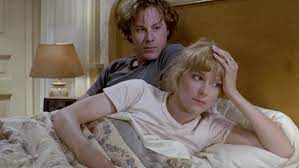
Did you ever get dumped? Not everybody has, and yet some of us have had more than our share of getting romantically dismissed, while perhaps not remembering that we probably dumped as many people as we were conversely dumped by. While I might contend that romantic rejection is potentially more stinging and painful than other forms of rejection (losing a job, or being dismissed by an organization, club, band, consortium, etc), it seems that dumpees have similar characteristics. They are usually overly sensitive to a point, flawed in ways that they themselves are oblivious to and/or maybe gluttons for emotional punishment. People who get rejected sometimes don’t want to acknowledge the oncoming headlights of rejection, until it’s too late. Conformists get rejected less, that’s why in part they are conformists. You can spot the potentially rejected because they cry, sometimes in public. There is courage in acknowledging inner pain, it frees one from a temporary self-inflicted torment.
A movie that dove (or sled?) head-first into a Suburban pit of melancholia and Male self-loathing due to romantic rejection was a 1979 Indie-budget-looking film titled “Chilly Scenes of Winter”, directed by rising film director Joan Micklin Silver and based on a short story by Author Ann Beattie. Starring John Heard as a love-starved office worker, the movie in modern times can be perfectly described by what kids nowadays identify as cringey, or cringe. The film personifies a biting, satiric dramedy, it also has moments of satiated truth in portraying truly awkward moments. Heard as Charles is a sort of inner self-aggrandizing young man who appears to be as engrossed in meeting his soulmate as much as anything else, this personal quest by Charles seems to predominate in his life.
Some of the film is done in flashback form and/or Charles turning to the Camera and delivering an inner thought neurotic monologue. Charles informs the audience that he is hopelessly in love with his Female co-worker Laura, played by Mary Beth Hurt. Laura is married, on and off to a droller, taller Realtor named Ox(played by Mark Metcalf- the boisterous ROTC Commandant from “Animal House”), The movie is unusual in that the viewer has more sympathy for the protagonist in the beginning of the movie than the end. A viewer remarked about the film that while there is no actual sex on screen, the viewer is emotionally worn out at the end of the picture. The professed intensity of Charles’ feelings, indeed are cringe.
Charles and Laura do have a sort of an emotional congruity when they are together, but Micklin-Silver’s staging of the couple’s dynamic is perfect, we get forced laughter between the two as Charles needs constant validation from Laura, who in turn seems quite ambivalent about all of her choices. Micklin-Silver also wrote the screenplay, the majority of the scenes play out in Winter time of two congruent years, set in Salt Lake City, Utah, of all places. The Female characters throughout the film seem more in control of their lives than the Male ones, the latter seeming adrift in general and not dialed in to a long-term future of any type. The more screen time that is spent with Charles, it seems that he desires Female companionship to define him in terms of it’s quality. But essentially giving this fact away in the poker game of romance makes Charles an easy candidate to qualify to be one of the dumpables.
The story provides the dysfunctional world that Charles inhabits and originates from. Gloria Grahame gives an inspired and sublime performance as Charles’ Mother; a still attractive middle-aged Woman who is mentally sliding quickly and developing self-debilitating habits that involve Charles needing to monitor her on a weekly basis. Her boyfriend Pete, played by Kenneth McMillan, is the most self-assured Male character in the film. Pete is a confident go-getter who likes to take Charles’ Mother Ballroom dancing, when she is not in the Hospital, exploiting hypochondria.
Charles is a tremendous ally to those that know him. There’s his younger sister Susan (played by Terra Nutter), his boss at work, Mr. Patterson (played by Jerry Harden) and his erudite and vagrant roommate Sam (played by Peter Riegert, who is just reprising his Schoenstein shtick from “Animal House” for this one). All of the aforementioned trio seek Charles’ wisdom, insight and in Sam’s case, a free place to crash, which he does with Charles at a house Charles inherited from his deceased Grandmother. Mr. Patterson wants advice from Charles concerning Mr. Patterson’s son not being ambitious enough with girls to Mr. Patterson’s liking.

As for Charles’ roommate Sam, he plays a philosophically oppositional role to Charles’ romantic doctrine in that where Charles is so much into being serious and finding deep meaning and symbolism in every interaction with Women, Sam sees nothing but fun in the next moment with Women. Sam commits to nothing, and coincidentally he is always available. Sam also has no defined career or goals, but his outlook makes him more attractive and approachable to Women who seem to occupy the same headspace. Sam is honest in that he doesn’t know what he wants and doesn’t know what he wants to do. Charles and Sam make good buddies and foils for each other, but where Sam understands the disloyal nature of people as meandering individuals, Charles is more responsible than Sam and doesn’t comprehend why he isn’t rewarded more by karma for his virtue. Sam’s unfettered outlook coupled with his low productivity frustrates Charles due to his view on the fairness of it all. By embodying some sort of maturity, Charles appears to believe he should be rewarded with something meaningful.
Charles feels victimized in that he has to tend to his scatter-brained Mother, provide shelter for his shiftless roommate and sometimes his Younger College-age Sister, and provide parenting tips for his older and tone deaf Boss at work. Charles in addition is abusive to those in his periphery, who could possibly be there to provide the insight and affection he seeks. The blind and wise candy vendor at the door to his office building who Charles visits throughout the movie gives Charles solid life advice that Charles never listens to. One of the secretaries in his office, Betty, played by Nora Heflin, is obviously interested in Charles, and she is easily as attractive as the object of Charles’ obsession. Charles can’t see it, he is so preoccupied with his emotional passion for Laura, he can see no other Woman in her place. In addition, Charles seems to be eternally vigilante about wanting what he can’t have.
From the moment Charles meets Laura, she is playful, but stand-offish, this is never explained, but not necessarily needed to be explained. I had heard Laura’s behavior as being characterized as flaky, but I wouldn’t agree. Viewing this film as a teenager, I found Laura to be frustrating and unjust, more than likely identifying with Charles on my part. Seeing the film again recently, I found Laura to read more like an open telegraphed book. Charles just doesn’t want to accept and believe by what he is seeing, just what he is feeling. Charles doesn’t grasp what Sam and others in the late 1970’s dating world do; that just because you share intimate moments with someone doesn’t mean they are now yours for possession. Charles’ flaws even to me become glaringly obvious with my most recent viewing of the film, to the point that I was rooting desperately for him to ditch the memory of Laura and pursue the painfully obviously more interested Betty, the more ditzy secretary. But Betty is too compliant, too easy to please, Charles wants difficult, he seems to think it carries more meaning with it.
Where Charles may be correct is that Laura is immersed in a loveless marriage, to the more orthodox-appearing Ox, who is a bore. It certainly makes sense that Ox and Laura are not compatible, it doesn’t equate to Charles and her being compatible, just because he can empathize that she isn’t happy with another Man. Laura doesn’t seem to know what she wants, but for a Woman or any other individual, this is not a crime. It’s only an affront to the lovesick Charles. Charles is oblivious to some of his patent flaws, such as he smokes cigarettes in bed, he’s quick to anger and frustration, he’s quick to feel disconsolate when things don’t shake out immediately in his favor. These are character traits that nobody is looking for, regardless of how cute one might be or how virtuously they are living their life.
In this sense, “Chilly Scenes of Winter” could be viewed as a romantically-tinged self-help film. Maybe you, the collective viewer, has a love life going nowhere, but take tips from this character on how NOT to pursue your next interest. Since the entire film takes place during a current Winter or a past one, there seems to be no happy place for Charles to escape his closed-in feelings of loneliness and rejection. Where characters like Sam, Pete, Betty, Susan and the Blind Guy are attempting to reward the oft-congenial Charles with life tips on how to navigate the modern evolving romantic atmosphere of everyone’s shared experiences, Charles wants to wallow in his self-made despair, it seems to define him.
As many observational chuckles as the movie is able to emit, “Chilly Scenes of Winter” delivers semi-serious moments where it is deemed Charles might need an intervention. When Laura wants to visit her gynecologist without Charles’ knowledge, Charles takes it as her behaving in an unfaithful manner, he responds in a passive-aggressive rage, not comprehending, that to the non-committal Laura this behavior is a bad sign. When Laura hints at ending their relationship, Charles declares he wants to rape her, as if such a demonstrative violent act would somehow galvanize her feelings for him and somehow reestablish some sort of imagined dominance. In that instance, Charles seems desperate to establish a sort of reinvented masculinity for himself through possessing Laura, that her mere presence in his life will make him more of a man than anything he can do for himself, by himself.

The movie has a barren, claustrophobic look to it, seeing that it takes place exclusively in the Utah Winter. It seems like it’s dark outside most of the time, or Gray if it’s daylight. Characters are always bundled up or driving around in cluttered, dirty cars. The New Age-ey sounding music for the film was composed by Ken Lauber. His music introduces a vein of whimsy and snark to the film, it’s breezy nature seems to taunt the over-serious nature of Charles, while being in perfect step with all of the other characters’ vibe of possible enlightenment, who seem to be comfortable in their own skin, unlike the occasionally ostentatious Charles. For the lovelorn, Charles takes our collective arrows of romantic rejection for us, his failures and patented missteps temporarily help us to feel better about ourselves. We feel messaging from this movie about how to not react moving forward, that the best advice comes from the blind candy vendor in regards to keeping still and looking for signs from the world that wants you and not catapulting yourself in to the world of self-esteem dissolution and the part of the world that doesn’t.
Leave a Reply