During the Holidays of 1978 going into 1979, my parents organized a movie-viewing family trip to Washington, D.C. in the family VW bus. I can’t recall whether it was in November around Thanksgiving break, December in close proximity to Christmas, or January right after New Year’s Day. I remember Washington was cold, frigid even. They had taken me to a special screening of Maverick Director Terence Malick’s “Days of Heaven” earlier that season, so maybe it was closer to Christmas or New Year’s. Retail stores weren’t open all the fucking time like they are now. On certain days around the Holidays, nothing was open except some gas stations, convenience stores, a smattering of retail and most Movie Theaters. Mom and Dad were in their mid-30s in 1978, they wanted to see a film that was another of the 1970’s Hollywood attempts to replicate and pay homage to the 1930’s and 1940’s, a trend that occurred a bevy of times in the 1970s.
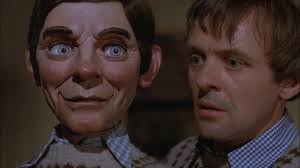
Quite a few films in the 1970s tried to either imitate the look and feel of 1930s movies (“Paper Moon”. “The Boyfriend”, “The Great Waldo Pepper”, “Bugsy Malone”), retell and readdress the 1930s in and around Hollywood (“Chinatown”, “The Day of the Locust”, “The Fortune”, “Farewell My Lovely”) or bring a retro-1930s ambiance to them ( “Silent Movie”, “Peeper”, “Nickelodeon”, “Lucky Lady”). Retro-looking movie making was a definite trend in the mid-to-late 1970s, Mom and Dad were taking us to see a satire of old movies in the form of “Movie Movie”, a modern production that paid homage to and made fun of older films from the 1930s by re-creating two hour-long fictitious films and combining them together like an old-time twin bill. George C Scott starred in this if I recall correctly. At the theater where our family went to see this, there was another movie playing in the other theater, one that was drawing big crowds and receiving praise from the likes of film critic Gene Siskel. The advertising posters and promotional stills for this picture appeared foreboding, with an off-putting life-like puppet, or more specifically a Ventriliquist’s dummy, featured prominently in the production stills. The movie was also a new release in November of 1978, the film was titled “Magic”.
My family did not have cable TV like HBO, nor did we possess VCR’s, so if a movie wasn’t playing currently in the theaters or showing on free television in them days, we didn’t see it. “Magic” was rated R, it did play in my hometown of Charlottesville, Va eventually, but at the tender age of Ten going on Eleven, I was too young to watch it. I think I eventually caught up to it on late-night television, highly edited of course due to the fact that it contained quite a bit of salty language and some nudity, mostly nudity of Ann Margaret, which never chased anyone away. That creepy-looking doll in the posters always had me wondering “what the fuck was all the fuss about this movie?” Siskel loved it, called it one of the Horror movie greats of all-time.
I can’t say I am prepared to anoint “Magic” as one of the greatest Horror movies of all time, but there is something quiet and unnerving about it, I felt dirty watching it. There is a feeling you get watching this film that you are privy to something you weren’t supposed to see, akin to that time you’re cornered by an older drunken relative who starts spewing their darkest and most personal thoughts to you even if you didn’t ask for them to. “Magic” as a collective has quite a pedigree of talent, that is for sure. Based on a novel by William Goldman, he also wrote the screenplay for this and the relationship between dialogue and plot concepts are well-synchronized, there are definitely things to discuss after the end credits are done scrolling.
Cinematographer Victor Kemper does a magnificent job, the setting is grey and seems to take place in Autumn, leaves are everywhere, the sky is always overcast and the characters are all somewhat bundled up. One shot in particular is spectacular involving Burgess Meredith as a crusty talent agent standing in the doorway of troubled main protagonist Anthony Hopkins’ cabin in the Catskills, the late day view of the mountains behind Meredith under a pallid Autumn sky sets an accurate and pensive tone for an uncomfortable conversation that is about to take place between the two characters. Meredith and Hopkins are fantastic in this movie, as is Ann Margaret. Career character actor Ed Lauter is who he needs to be, an outdoorsy and abusive bore. The direction by Sir Richard Attenborough is patient and simmering, though it’s interesting to note that this movie was released in late 1978 and feels like a hybrid between a 1960’s/1970’s character study about a Man losing his mind and a 1980’s slasher movie, the latter was a genre that was in it’s infancy at the time of this film’s release. The amazing Jerry Goldsmith created another memorable music score for this, man, in 1978 Goldsmith was on fire as a composer of film music.
“Magic” in some ways, feels like an elongated “Twilight Zone” episode, something that could have been hashed out in a half-an-hour, but this is never dull and definitely fits into the sub-genre of Horror that had blossomed in the 1960’s; movies concerning one character losing his/her fucking mind. Films that are reminiscent of “Magic” to me include “Repulsion”, “Psycho”, “Images”, “The Other”, “Sisters” and “Fingers”. The film presents a character named Corky, played by Hopkins, who we want to root for but it seems apparent that Corky wants to lead a charmed life and does not give a tinker’s damn about what he needs to do to achieve it. Corky wants to be a successful and popular magician, the vocation of magician seems to be a metaphor for any kind of performer, or in author Goldman’s case, a writer. The film’s first few minutes gives insight into Corky’s upbringing, that being by a Father who was also a Magician named Merlin (played by EJ Andre. The Father, at the start of the movie, is slowly dying and attempting to instill confidence and resolve into his Middle-aged son before he passes.
When we are first shown a glimpse of Corky performing, he is a hot mess. Self-righteous, withdrawn, introverted, Corky is intelligent but he doesn’t relate to people well, a bad trait to possess if one is intent on becoming a popular performer, let alone popular performing magic tricks for live audiences. Goldman’s writing is quite provocative for the first half of the movie before the entire premise devolves, for all intensive purposes, into a classic slasher pic. Goldman, through his character of Corky, seems to be baring his own soul and musings on what does it take to succeed in performing so that one may have an existence beyond that of the hardscrabble commoner. Corky as a character is an ambitious intellectual, he doesn’t possess mundane skills, he can do magic tricks with a deck of cards, he can create illusions that entice and baffle people when they are faced with his magical creativity. Yet Corky himself is dull, he’s doubt-ridden, he does not possess the moxie to hold people’s attention, he himself is too humble. This exposition of Corky as a character maybe Goldman exposing himself as a person, that he himself in his mind is not compelling enough to draw attention to himself on his own, but what about an alter ego? Something that lives in the back of his mind, something not timid.

Enter into this film the character of Fats, who is not a person, he’s a Ventriloquist’s Dummy. we are introduced to Fats about Fifteen minutes into the movie, presumably after Corky’s Father has passed away. Fats simply rests on Corky’s arm in front of audiences like an appendage, doing nothing spectacular besides being everything in earnest that Corky is not; Fats is bold, brash, egotistical, unfiltered, sexually lecherous, incessantly and sarcastically confrontational. Where Corky appears to be sensitive and contrite, Fats is not, the latter does not give a fuck and says whatever is on his mind. The same personality traits that Corky exhibited to audiences that made him a lame and a nobody, Fats displays the opposite of those characteristics and his unfiltered vulgarity makes the two of them suddenly a must-see act. Goldman’s point being that the public doesn’t want to see who you really are, they want to see what you wish you were. Where nobody wants to see Corky perform incredible mind-blowing card tricks, they do want to see his alter ego come on to every attractive Woman in the room and tell anyone who doesn’t like it to fuck off, in part because they are unable to do it themselves. Through Fats, Corky has learned how to tap into the darker side of the public’s subconscious and people love it. Burgess Meredith plays an aggressive talent agent named Ben Greene who wants to push Corky’s act as far as he can and make a mountain of cash from it while the iron is hot. Yet Ben is beginning to understand that Corky is not only a creative genius, he may be a dangerous paranoid schizophrenic.
“Magic” is classified by most film critics as psychological Horror and that rings true. The movie follows Corky as he attempts to flee from being exposed as a certifiable lunatic by prospective physicians who work for Network Television (Greene wants Corky to get a psych evaluation before investing in him for a major TV deal, he compares his comet-like success to popular performers of the 1970’s who had meteoric rises in real life, such as Steve Martin and Rich Little) and return to the area where he grew up, a small town in the Catskill Mountains. A town inhabited by memories of a pleasant childhood for Corky as well as a girl who is now a Middle-aged Woman that young Corky always had a crush on, Peggy, played by Ann Margaret.
Peggy is now living in a loveless marriage to Duke (Played by Ed Lauter), the couple is attempting to be resort cabin realtors but their lives are stagnant. Peggy perks up a the prospect of re-connecting with Corky while Duke is away doing overcompensating outdoor Man stuff. Corky’s temporary fame that he has discovered through his act with Fats makes his otherwise droll appearance seem attractive to Peggy. Corky gives off the impression that he is successful now, his semi-celebrity status and sensitive demeanor appeals to the bored Peggy and Corky is desperate for Human intimacy and interaction. He has shuttered himself into a life of the crowd he performs for, his agent and his creepy alter ego, the Dummy.
When romantic sparks fly between Peggy and Corky, Corky entertains thoughts of distancing himself from his alter ego for awhile, Peggy is now keen on leaving her boring and brutish husband for him. When Ben Greene shows up at the cabin to inform his investment that Corky needs to seek psychiatric help if he is going to continue his pursuit of fame, the film becomes increasingly unsettling. It’s interesting to note that while the construct of “Magic” seems now very formulaic as a slasher film, there weren’t many movies like this in 1978, so this film which may appear cliche-ridden in the subtext of the slasher sub-genre now was not at the time of it’s release, these were relatively fresh ideas. Not that there hadn’t been slasher movies to this point (“Halloween”, “Black Christmas”, “Silent Night, Deadly Night” come to mind) but it was a fairly new cinematic niche, so “Magic” seems like one of the prototypes for the slasher movie construct.
In a manner of speaking, “Magic” is an angry little film and it espouses un-spoken ideas about adults being unhappy with their lives and sexual repression as a by-product of such, or as the old Country song proclaimed, “Looking for love in all the wrong places”. The main characters here all live loveless lives, celebrity and fame are looked to as potential answers to loneliness. The movie floats the idea that most people are lonely, the Grey and mountainous Catskills serve as an appropriate backdrop to this isolation that the characters exude. In sequence, Corky’s Father believes encouraging Corky through harsh criticism will spur him on to a better life than he had. Ben Greene just wants money to satisfy the void in his life. Corky craves celebrity, thinking it will bring him the joy and prestige that he lacks as an individual. Peggy wants an adventure with a partner, not the slow death and relationship internment being offered by Duke, who pursues hyper-masculinity as a way of masking his failures.
Director Attenborough recreates the menace and tragic madness of a film he acted in as the villianous protagonist years earlier, “10 Rillington Place”, a film based on true events about a lonely Male serial killer of Women in 20th Century London. Attenborough brings a similar haunting energy here. We know once the violence and murdering has begun, nothing good will follow, but Attenborough still wants us to feel and to care. Without the angle of mental illness, this film might transpire more akin to a Hitchcock thriller or an episode of “Columbo”, but the movie begins to blur the lines of reality and sanity by making the viewer wonder whether Fats is an extension of Corky or an individual and menacing entity. The expressions and mannerisms of the Dummy are quite clever and eerie, we certainly get the idea that Fats is possessed, but by what or by whom is the question. Fats curses quite a bit and frequently blurts out sexual innuendo. Fats is in many ways, Corky’s Freudian doppelganger, quick to mouth off when threatened and equally quick to make sexual remarks when aroused.
Composer Jerry Goldsmith in 1978 was a force of nature. While the movies he scored in 1978 might not send your head buzzing, the scores Goldsmith wrote for them were phenomenal. Goldsmith in his career was nominated for an Oscar for Best Musical Score Eighteen times! He only won for “The Omen” in 1976, but in 1978 he created at least six scintillating scores, including the one for “Magic”. He was nominated twice in 1978 for an Oscar, once for his score for “The Boys From Brazil” and one for “Star Trek: The Motion Picture”. He also scored “Damien: Omen II”, “Capricorn One” and “The Swarm”. All of these scores, especially “Boys From Brazil”, “Capricorn One” and “Damien: Omen II” are all fantastic and pulse pounding. It appears to my memory in the rear view mirror that Goldsmith and John Barry supplied the majority of the most exhilirating movie score moments of my cinema attending childhood. In “Magic”, he provides a wave of full and breathy string work, he used a Harmonica and chordal dissonance to signify the presence of Fats in key scenes.

There are two scenes in this film that stand out to me beyond the rest of the film and they make the movie worthy of discussion for me. The first is the opening scene as Corky comes home from his first gig at an open mic night and attempts to lie to his Father about how well it went. We watch the dialogue unfold between Father and Son as Attenborough intercuts silent footage of Corky melting down on stage in front of an apathetic and dispassionate audience. Attenborough so adeptly captures the vibe of detachment and humiliation that anyone who has attempted to perform for an uncaring and hostile crowd of drunken adults has felt. Hopkins magnifies his character’s neuroticism and frustration brilliantly. The second scene in question involves Hopkins and Margaret attempting to connect on a spiritual level through a card trick that may or may not be involving mind reading and personal synchronization. The idea that love for another can emanate from a sort of supernatural psychological symbiosis is fascinating to me, an electric and intense scene. Since Peggy envisions Corky as a celebrity now, she gladly looks past his impatience and verbal abuse if it means that he will coach her to another level of life success, she also doesn’t mind his sexual objectification of her, since she adores his combined perceived status along with sincere nostalgia for her. These two scenes are brilliantly executed and move “Magic” from what could have been a common slasher film by modern standards to a disturbing psychological portrait of people willing to cheat their own sense of inner morality to achieve a feeling of self-worth they so desperately want to ascend to.
Leave a Reply