A recurring conversational theme used to arise often whenever I recall adults talking about film either at my own family dinner table or in the printed medium as the early 1980’s became a climate for a groundswell of professional film criticism. The theme, or more specifically question that became very trendy to ask about modern cinema at the time was “Why was this made”? To the cinephile, the intellectual filmgoer, the question related to a movie’s meaning, message and historical artistic significance. To the layman, the everyday citizen searching for entertainment, interest to a film might relate to a book that they had just read, a societal trend or the film’s relation to current events. PBS and Chicago-based film critics Siskel and Ebert were still fighting the good fight in the early 1980s, calling out films being made from a gatekeeper’s perspective; that films ought be made with meaning or they merely exist as a cash grab and for that alone, should be shunned and detested.
In the early 1980’s, however, film fare that was deemed strictly exploitational was getting a facelift. Movies which included subject matter deemed sordid or distasteful were getting bigger budgets, bigger promotions and quite frankly were being superior in quality produced films than such fare has been in the past. The early films of John Carpenter are an example, plots that on the surface sounded like drive-in movies but were slickly made and featured solid casts with top-notch production values, music scores and screenplays. Crime films of the early 1980s, like Michael Mann’s “Thief”, Burt Reynolds’ “Sharkey’s Machine” and Clint Eastwood’s “Tightrope” weren’t just action flicks, they were awash in tawdry content, directors such as Brian DePalma, Martin Scorcese, Michael Cimino and Walter Hill loaded their violent images with menace and shock, imagery that once had been fringe was now increasingly mainstream.
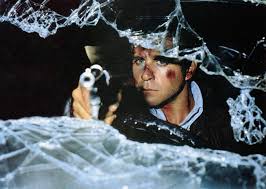
In January of 1982, a new film that was unabashedly exploitative in nature but had decent production values and was receiving a lucrative promotional push (If I saw TV trailers for this in Central Virginia in early 1982, then that is significant promotion) was released, titled “Vice Squad”. The film was a part of a new wave of gritty and splashy exploitation films from Hollywood, more in tune with what was going down on the street, the message went. For all of it’s advertising that accentuated the violence, action and salaciousness of the film’s atmosphere, upon viewing this again if I were to attempt to answer the previous question raised earlier in this post, “why was this made?” The answer appears to me more crystallized upon this viewing; this film is about sex, where a culture drifts off to when simply just getting off isn’t enough.
It is now the tale of internet legend, but it appears to me that whenever the denizens of cinema criticism gather on line to discuss “Vice Squad”, the subject of legendary Director Martin Scorcese claiming in an interview that he enjoyed viewing “Vice Squad” the year it was released more than Steven Spielberg’s “E.T.” (released six months later that same year) is always breached. A seemingly preposterous thing to say in 1982 seems not too outlandish now. Beneath it’s stereotyped laden caricatures, hammy dialogue that on occasion reminds one of the kind of theater you would see in a say no to drugs and prostitution commercial and general appeal to the tropes of entertainment of the dim-witted and tacky, “Vice Squad” is an ugly celluloid pamphlet on the depravity of certain enclaves in inner-city America where ethics and morality cease to exist (Sure, you could find them in rural areas, too, but you got to drive a lot farther.). Unlike social warning films of the past, such as “Reefer Madness” or “The Lost Weekend”, “The Days of Wine and Roses”, “The Man with the Golden Arm” or “Rebel Without a Cause”, “Vice Squad” confesses that these are people who seek out this sort of existence because they themselves are troubled, bored or just not wired right.
The surface premise of “Vice Squad” is fairly visible, it’s set in Los Angeles, presumably Hollywood at night, a public intentional display accessible to Hollywood’s occupants on a daily and nightly basis in real life. Here are the prostitutes, junkies, hustlers, pimps, drug dealers, motorcycle gangs, cross-dressers, etc., essentially the counterculture to working-class middle America, they are all here to intermingle and solicit their mercantile services. The viewer also becomes introduced to the police that work this area. The cops are mostly dressed in plainclothes, they look like thrift store bargain hustlers. If they weren’t in this movie, they would be cast on some PBS kids educational show. (Guess I’m dating myself with the PBS reference.) There is a symbiosis and camaraderie here between the cops and the various transgressors of state law as they interact on a daily basis. The drug dealers, junkies, prostitutes and cops all seem to know each other on a first-name basis, there seems to be a modicum of respect between these two fronts. The film then delivers some scenes involving characters in this fictional Hollywood nightlife, people searching for inappropriate adventure, one of the angles that made “Vice Squad” controversial was that the film wasn’t clear whether we the audience were supposed to be aghast or turned on by what happens in this flick….or both.
Filmed in a night time haze of neon, glistening post-rain soaked streets and steam rising from the city’s grates, “Vice Squad” has a look to it, Director Gary Sherman certainly presents sordid material here but there is always a constant brash and snarky tone, which the film does draw the line at sadistic sexual violence, it appeals to the idea that understanding a more permissible society will bring one wisdom in the long run. There is a street wisdom attached to Los Angelenos here, that living in this particular city gives one a perspective filled with insight on human behavior. The film opens with a view of the life of a Female character we will know as Princess, played by Season Hubley, who plays an apartment-complex dwelling San Diego Mom in a bathrobe until it’s the weekend and she passes her Elementary-school aged child to a Babysitter and she’s off to Hollywood for the weekend to play street hooker.
Early in the film, however, we get a sense that Princess isn’t just into hooking for the supplemental income, that it fills emotional and adrenaline rush gaps in her otherwise incidental life. Hubley as Princess is a cosplay prostitute, but she does carry a dose of self-vindicated aggression with her that can pop off at any time, in addition, Princess doesn’t seem as hung up about the money as she is her own curiosity and boredom. On the other end of the spectrum from Princess is Ramrod, played by an intense Wings Hauser. While Ramrod has the cosplay angle in common with Princess, his fantasy appears to be as a violent and controlling street pimp, which he embodies in part due to the fact that he is indeed psychotic and sadistic. Ramrod is flying around Hollywood at night in a souped-up customized pick-up truck. He wears Cowboy attire, blasts contemporary Country Music from his truck and generally terrorizes Women on the strip, his most promising enterprise appears to be as a pimp, where he is shown more than eager and willing to beat and kill his girls if they displease him. The scenes with Ramrod and his Female victims are arguably what is most troubling about “Vice Squad”, in 1982 and today. “Vice Squad”‘s scenes of sexual abuse and torture almost appear to contain an unfortunate sense of intentional eroticism to them, that just as Ramrod is getting off to whipping, beating, torturing and controlling Women, the scenes play from a perceived perverse sense of deviant foreplay, the “Vice Squad”‘s intentional shock factor is accentuated by scenes of violent bondage, in other words, the filmmakers know what imagery they are striving for and it sullies the film, in my mind, to a degree.

While there is a soundtrack in the film, which is a mix of current music from 1982 and some various soundtrack music from Joe Renzetti and Keith Rubenstein, “Vice Squad” actually contains quite a generous amount of screen time with no music. The lack of music lends a sense of gravity to certain sequences, levity to others. Part of “Vice Squad”‘s charm is that it celebrates it’s atmosphere’s lunacy, while milking it’s volatility and danger to fuel it’s conflicts. This is a world where the filmmaking industry is hard at work in it’s insular existence and on the street of Hollywood looks like a free-for-all of drugs, violence and prostitution. Into this den of casual corruption comes Gary Swanson as Detective Tom Walsh, the cop with an outraged sense of moral decay that causes him to lecture anyone beneath him, criminals included, like he’s a school administrator assigning detention. He’s even wearing a Member’s Only jacket/ windbreaker, during that brief marketing window in time when that appearance was tres chic. (in the suburbs). A cop who symapthizes with, yet shames, berates and haggles hookers for information. For all of his nice guy virtues, he sure does hang out with hookers a lot.
When it becomes clear that Ramrod is out of control and needs to be brought to justice, the film begins to crystallize it’s narrative focus and not just play out like a hip cinematic expose of the scandalous night life on the street in early 1980’s Los Angeles. While the cops in this flick do operate on the street out and in the open as much as the hoods, the police are portrayed as almost deficient, Ramrod is presented as being superior to them, a macho Anglo cowboy here to humiliate the multi-cultural Los Angeles Police Department. While the Police and First Responders have all of the dilligence, focus and gravity of their cinematic brethren from shows such as “Dragnet” and “Adam-12”, here they are dealing with perpetrators involved with transgressions like giving people golden showers, dismembering people’s private parts while the cops are bribing hookers with prospective jail time if they don’t assist in sting operations and impersonate people from the Island of Jamaica so they can entrap hookers on busts. Threatening suspects with good old-fashioned torture and death.
The film was made on a budget of $5.5 Million, which while paling in comparison to the costs of A-list movies, that was still a considerable amount of money to be spent on a B-movie with no major stars. Avco-Embassy put capital behind a film that was second-tier subject matter but there was a growing belief in creating hits for the masses on small budgets. This film had a polished look for it’s pedigree and the script by Sandy Howard, Kenneth Peters and Vincent O’Neil isn’t bad, in fact, it’s pretty hip in spots, confrontational scenes carrying plausible emotion and some comic timing on occasion. The script is coming from less of a place of judgement and more a place of ironic voyeurism. For someone to filter down the Hill from their Hollywood pad to find this scene and create a script about it doesn’t sound like a stretch, but creating an interesting story is harder than one would think. An argument could be made that without the Ramrod character terrorizing Hollywood in faux Cowboy clothes, this movie could have been an oft-kilter Cheech-and-Chong-type sex and drugs counter culture comedy. The menace of Ramrod is omnipresent in this film, he represents an unhealthy yet appealing amount of virility. Wings Hauser is a memorable bad guy here, in part because he is unrepentantly cruel while simultaneously milking his White priviledge for all it’s worth, with mixed results.
It’s amusing to me that Comedian Robert Townsend cast Gary Swanson in a skit where he was imitating Clint Eastwood in Townsend’s edgy comedy “The Hollywood Shuffle”(A film, ironically, that was bemoaning the belief that in the Hollywood of the 1980’s, African-Americans were only being cast in movies like “Vice Squad”). Townsend seems to reference “Vice Squad” in “Hollywood Shuffle” and hints at films like it highlighting racial stereotypes. The script here has extreme obviousness at times, at other times there is moral complexity and perversion involving scenes involving Hubley and /or Hauser. The police have conversations with each other which serve as narrative lectures to the audience on modern sexual perversion, something only the police and people who frequent Hollywood pool parties would be exclusive experts on, I’m surprised they don’t go into detail about what a blumpkin is, or maybe that hadn’t been invented and/or patented yet.
Despite the stigma that comes with portraying a prostitute, Hubley has a chance to act here. her energy is serious, she verbalizes the paradox of her behavior but has zero qualms about revving from 9 to 60 in seconds and lashing out quite spectacularly. Being a prostitute gives her character self-endorsed street cred. She is safer as a caricature in tis world of sex industry types that openly roam the night streets of L.A. Hubley plays a Woman who appears to enjoy the control and rush that comes with being a prostitute. The money almost seems after the fact, Fifty dollars for blow jobs or intercourse isn’t sending anyone to private school any time soon. Hell, it’s not even a down payment on a root canal in 1982.
Hubley had one of those short Female haircuts of the early 1980’s (Man, I dug that look) and the temperament of a Woman who could be straight, could be gay, you weren’t sure, but she was real. Her desperate energy in her scenes with Hauser are intense and that is perhaps an understatement. Princess’s interaction with the Police Officer is predictably cynical, we are wishing for potential romance but we came to the wrong movie. In scenes where Hubley has to be demonstrative or physical, she is dynamic. a fully engaged and possessed presence. She has a touch of rugged Feminism to her performance. Her chic new-wave look is a fashion hall pass, that she’s a hooker makes her a unicorn. She projects a fantasy that her mostly wealthy and eccentric older White Men prefer; a classy-looking White Woman who wants to be sexually abused, humiliated and controlled. Yet Hubley through her character carries an impulse-laden reactionary streak that serves as her self-defense mechanism when she is physically or metaphorically cornered, she lashes out like a circus cat who hasn’t been fed or given it’s meds.
The ensemble of supports is compelling, Beverly Todd as Louise Williams, a Female African-American police officer stands out, she interrogates and threatens suspects while wearing a ladies’ hat and blouse combo. Pepe Serna is a detective (He gets it with the chainsaw as one of Tony Montana’s entourage in “Scarface”)as part of a bumbling duo that get beat up by perps more than once. There are various forgettable hookers, pimps, crazy street bag people, sex-crazed Middle-aged Men and burnt out street cops, the writers didn’t have to search far and wide for these stereotypes. Gary Swanson as the hardened Police Detective is jaded and heroic but he seems to be the embodiment of impunity and regulation, which is no fun. He can’t stem the tide of moral complacency. His low-key casual conservative look is supposed to be a dependable presence we can identify with and rely on but the suggestion from the script and Director Sherman is that society is moving to a more apathetic and tackier existence, that the public is tired of ethical rule following and the crowd is embracing a kind of sexual nihilism where if you can’t take something by force and attitude, you can’t have it.

Where “Vice Squad” succeeds is not through it’s wisp-thin plot but through it’s veneer, it’s anti-establishment energy and attitude. Night time Hollywood is portrayed as a cesspool where the public, if they are bold enough, go to live out their depraved fantasies which may happen to mirror the lives of their favorite celebrities. “Vice Squad” provides a savage and sultry action vehicle while making the subtle point that this is the sullied reality that the fake world of Hollywood’s film industry and it’s promise of virtuous dreams has wrought a culture of people clamoring for notice and attention. If they can’t achieve it through talent and/or hard work, they embody a sort of self-devaluing notoriety. The cops are viewed here as having the prestige to the public of substitute school teachers, they have a sense of old world propriety while the corrupt desires of the adolescent masses engulfs them. By this metric, “Vice Squad” most certainly has value and has a point and I agree with Martin Scorcese, I would rather watch this movie any day over Spielberg’s “E.T.” and get a substantial amount of feeling for the existential head space of Americans in 1982 versus some creaky family-values bullshit.
Leave a Reply