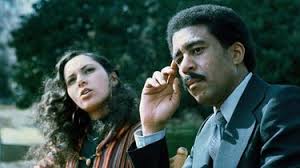
I believe it is difficult to begin a conversation about the legacy and work of comedic and dramatic titan Richard Pryor without the discourse spinning off in about a hundred different directions . While I confess I have never seen two of his most revered film performances; those being the 1973 Urban legendary comedy film “The Mack” and the critically acclaimed 1972 biopic about Billie Holliday “Lady Sings the Blues”, I have seen quite a few of his other films, as well as watched some of his stand-up, listened to his comedy albums and as a kid (and later as an adult) viewed with pleasure and poignancy his controversial and short-lived television series. As a White kid who attended a racially diverse Southern Elementary school in the 1970’s, I adored Richard Pryor. As a teen, I began to understand that Pryor’s work and legacy had much more depth than just being funny.
Pryor passed away twenty years ago at the age of 65 and two things inceptually became clear to me as people began to remember what he left the world of entertainment at his passing; Pryor had a huge body of work that spanned four decades and if you believe (as many do) that there exists a mythical establishment class in the modern Western world, they were simultaneously bemused and afraid of Richard Pryor. Pryor’s work and comedy was brilliant, but more so to me because the older he got, the wiser he got, and he became quite adept at encasing deep and salient points about society and human behavior inside his comedy. I think most would agree that once Richard Pryor became too much of a product and a brand, there was nothing left for him to do but to make mediocre Hollywood films because that’s what payed the most.
Amidst a gaggle of solid comedic films from the 1970’s, where Pryor was either a co-star or had a bit part, I’m referring to funny and scene-stealing turns from films like 1973’s “Hit!” with Billy Dee Williams, 1976’s “Silver Streak” with Gene Wilder and also from 1976, “Car Wash” with George Carlin, Garrett Morris and Bill Duke, when you look at Pryor’s filmography, there is a tendency to take notice of how many films that Pryor was actually in, the list is voluminous. Pryor was in that rarified air of comedians where it seems like screenwriters were writing in cameos for him so he could improve their material. There was a snarkily rebellious demeanor that accompanied Pryor on-screen, you could feel the energy in fellow audience members when he would appear in a movie as if America had a new celluloid super ego and it was observant, starkly and acutely funny and Black.
After watching a movie from 1977 of his titled “Which Way is Up?”, I now feel that outside of a litany of solid films that I could recommend for their entertainment value (“Uptown Saturday Night”, “Bustin’ Loose”, “Stir Crazy” are a few that come to mind), there are at least six Pryor movies that I have seen that I believe to be exceptional, noteworthy and discussion worthy; “Bingo Long Traveling All-Stars and Motor Kings”(reviewed in this blog previously)which does not have a huge Pryor influence in, but he’s funny in it and it’s a damn good watch. The other five Pryor films are full of his influence, including the aforementioned “Which Way is Up?”, Paul Schrader’s “Blue Collar”, Pryor’s concert films “Richard Pryor Live in Concert” and “Richard Pryor Live on the Sunset Strip” and finally, a film that gets very little notice but it is a fantastically revelatory film that was directed by Pryor, “Jo Jo Dancer, Your Life is Calling” from 1984, a film that reminds me as much of a Black version of Bob Fosse’s “All That Jazz” as I could imagine. Pryor’s “Live in Concert” movie might be his masterpiece, the first work of his the aliens find when we have vanished, it’s hard to believe that Ninety minutes of a guy doing monologues could be so hilarious and captivating, but it was and I would argue that many performers attempted to recreate what Pryor had done in his filming of his live performances he gave at theaters in Southern California in the late 1970’s, but hardly any were as influential and successful as Pryor’s first largely marketed concert film.
“Which Way is Up?” is not for everyone, I first heard about it from kids at my Middle School during the historical era that involved the birth of Cable TV channels. Directed by African-American film director Michael Shultz (who also directed “Car Wash”), “Which Way is Up?” could be characterized as uneven in it’s pacing and proliferation, but you can feel the presence of Pryor’s influence over the material here, it feels similar to his eventual retelling of his own real-life experiences Seven years later in “Jo Jo Dancer”. This is a comedy, there are an abundance of scenes with big laughs, but it’s not buffoonery. Pryor creates a film that has something to say about the class struggle, about the dynamic between the sexes, about attempting to define his own Masculinity. Pryor uses a specific comic vehicle, named in the credits as source material for this movie is fabled Italian film Director Lina Wertmuller’s “The Seduction of Mimi” from 1973.
You can tell Pryor’s concepts are in this by scenes that play out in similar fashion to skits from his TV show that was airing on NBC in the Fall of 1977, just around the time this film was being released. Pryor in his late 30’s and early 40’s was making pointed observations within the verbal riffs of jokes that included mother-fucker and the n-word in them. Part of the genius of Richard Pryor was delivering profound statements in his jokes using the N-word and knowing that the kinds of people that didn’t agree with him or simply disliked him would tune him out when his language reached this path, thereby his comments would then be exclusively for Black people and/or anyone else who saw things from a worldly perspective and not just a diminishing one of African-Americans. There exists a brief interview video of him from 1980 that lives on the internet while he was filming “Stir Crazy” that has the same raw energy from “Which Way is Up?”; where Pryor is saying real shit and does not give a fuck. The things that he is saying are brutally funny, yet keenly observant. Pryor in the video is coked-up and drinking, I wouldn’t want him entertaining any other way. A comedy comet blazing across the sky, without filter.
“Which Way is Up?”, from a screenplay written by Carl Gottlieb and Cecil Brown, begins in earnest with Pryor starring as Leroy Jones, a California Orange Grove worker who lives in a crowded company-sponsored house with his prudish wife, his crusty father (also played by Pryor, who revives his “Mudbone” character from his stand-up routines for this movie’s role) and his Father’s younger wife and their children. Leroy’s lovely wife Annie Mae (played by the fantastic-looking Margaret Avery)won’t have sex with him, meanwhile they have to listen to the loud and unapologetic nightly sexual gymnastics of the old man and his younger wife. One day at work, Leroy and his work buddies (played by Daniel Valdez and Dwayne Jessie) are approached at their humdrum jobs picking Oranges by a Caesar Chavez-type Union organizer and recruiter. Leroy accidentally appears to step forward and lead his fellow workers to Unionize, which in turn catches the attention of the job site overseers.

The Company bosses offer Leroy a one-way ticket out of town to Los Angeles with the understanding that if he were to ever return, he would be beaten and jailed. Though he is still married, Leroy heads out alone to L.A. where he is able to land manual labor jobs, while he pursues the beautiful , a local Labor organizer named Vanetta, played by the dazzling-looking Lonette McKee. After an awkward courtship, Leroy and Vanetta embark in a courtship that culminates in a baby. While working one of his service jobs, Leroy accidentally thwarts an assassination attempt on the Caesar Chavez-like Union organizer. Upon realizing that the Police and the Orange Grove Company are in cahoots, Leroy plays dumb when questioned by the police as to what he saw. His actions endear him to the Company (even though he had just inadvertently thwarted their attempt to kill the Union organizer), they wanted to reward him for not ratting them out, and yes, these are the same people who told him to never come back before.
Leroy now returns to the town he had come from in a management position, he is now the boss of his old friends. He attempts to juggle his time and attention away from work between his legal wife and his spiritual/romantic one, who, along with their child, he has tucked away at a residential complex across town. All is going according to plan until he discovers his formerly frigid wife is now gonzo for sex and after a few failed attempts to rekindle their marriage from a physical standpoint, gets herself impregnated by a local minister, who is played by ……..Richard Pryor. Leroy’s ego cannot handle this slight and begins a plot to screw the Minister’s Wife, Sister Sarah, played by Marilyn Coleman.
Various shenanigans ensue from there, but that is essentially the plot, minus a deluge of social commentary that Pryor and the script assert throughout the rest of the film. It is eye-opening to me that after all these years of being awe-struck by the movie “Blue Collar”, one of my favorite of the most cynical of the films of the 1970’s, how many times “Which Way is Up?” is relevant and synchronous to the aforementioned Paul Schrader-directed masterpiece. “Blue Collar” took a sobering look at the relations and divide between management and the work force in Big Business and Big Industry and “Which Way is Up?” harps on like-minded subjects in a satirical manner, but the industrial overlords in the latter film are shone in a much more ominous, obvious and metaphorical light.
Any character representing the overclass, including longtime Pryor collaborator Paul Mooney as a Police Detective, all wear a Purple ring that emanates an ominous glow at times, signifying their elite dominance and shadowy secrecy. Pryor’s character learns to recognize this symbol (as evidently Pryor himself had) and it’s meaning early on in the movie, while his fellow proletariats do not, living in their insignificant oblivion. As the movie lurches toward its climax, it becomes apparent that Leroy’s personal life is a mess due to to his own ego-driven and impulsive decision making, but that his work life is sabotaged by an exploitative and demeaning system that has potentially chosen him based on his inability to stand up for himself and willingness to be exploited. The same ambitiousness, ruthlessness and cunning he exhibits in his juggling of three women in order to keep them satisfied to a degree is lost in his professional life, where he is a psychological punching bag for both the contemptuous management above him and the oblivious everyman employees beneath him. Leroy really doesn’t have ambitions outside of work, aside from fucking and keeping the Women in his life away from each other.
Although “Which Way is Up?” is not always congruent story-telling, to that I say, so what? The need for film to transpire with a narrative formula of say a Neil Simon script might have been a prerequisite for College educated Anglo audiences, but I would argue that in 1977, Pryor was aiming his films at Black, Latino and alternative audiences mainly for marketing, but this film has a sense of solidarity to it, a power to the people element, if you will. While the film contains jokes about the modern work climate and sexual politics, there’s nuggets of frank commentary dispersed throughout. When Leroy is rewarded with a job offer for not giving a description of the assassin to the police, the same company employees, led by a goon played by TV/Movie sidekick actor Dolph Sweet, are practicing shooting targets of the Caesar Chavez Community Organizers’ face in their office while Pryor winces every time they fire off a round.
Scenes of domestic violence and sexual dominance are played for laughs and these scenes are extremely funny but this is edgy territory and this could offend or upset the overly sensitive. A scene between Leroy and Annie Mae is manic and hysterical in which both characters espouse their own hypocrisy and feelings of need and possession as a way of fortifying their own respective egos. Actress Margaret Avery is mutedly beautiful, another scene where she annunciates the need for a spark in their physical relationship is over the top hilarious, where marital aides and sexual props are involved and when the two of them are interrupted by two young children, one of the children remarks to an older adult, “Look, Mom, they’re playing horsey”. Pryor in his alternate roles as the old man and the slick minister is a laugh riot, the acting precedent set by British acting standards , such as Sir Alec Guiness and Peter Sellars in playing multiple roles in one film, is matched in this movie by Pryor’s ingenuity. I couldn’t imagine Pryor using different actors for those roles and anyone else being funnier in them.
The Musical score by Norman Whitfield is chirpy and funky, with the 70’s dreaded ominous-sounding low frequency harmonica sound used to signify the bad guys, like a modern-day French Horn sound to symbolize Peter’s Wolf. The cinematography by John Alonzo (He filmed “Chinatown” and “Scarface”) is crisp, this looks like it was filmed on the back lots of Southern California. From what I am to understand, “Which Way is Up?” was not a hit with film critics of the late 1970’s, but it did have a niche following with filmgoers and did turn a modest profit. Like other populist comedies of its’ time, such as “Cheech and Chong’s Up in Smoke” and “Smokey and the Bandit”, these were movies for the people, not the erudites. The folks that were disregarded by the elites, the critics and the award shows were embraced by artists looking to connect with the working people, especially the younger public not tethered to the establishment. Proper Hollywood’s ideas of top-notch award-winning comedy in 1977 belonged to movies about the middle-to-upper American educated upper class, such as Neil Simon’s “The Goodbye Girl” or Woody Allen’s “Annie Hall”, films about college educated anxiety and a film-going public that was embracing ideas such as psychoanalysis and yoga. Pryor’s movie was meant for a more working-class element which had different issues to navigate.

One couldn’t imagine Neil Simon or Woody Allen characters assailing each other with butcher knives over infidelity and certainly not in a manner in which it would emit belly laughs from the target audience, but Pryor knew what he was trying to say and who he was talking to. In some ways, Pryor’s film embodies the spirit and articulated the tone that he had attempted to mine with his trailblazing TV show, which only aired for a scant Five episodes total before it was yanked off the air by NBC in a hail of controversy. The show undoubtedly influenced future comedians such as the brilliant Dave Chapelle and the Wayans Brothers, the latter of whom created the groundbreaking American television show, “In Living Color”, in the early 1990’s. Pryor’s representation of Black Woman archetypes in this film is supportive and positive as well, creating drawn out characters typically not seen in White Hollywood films; Pryor presents a “good girl” Black Woman, an activist/labor organizer and a “Church Woman”, all three have significantly more depth than what non-Black 1970’s films gave to their African-American Female characters.
“Which Way is Up?” is a film that deserves to be rediscovered not by those that saw it the first time and understood it but by a public that is looking back fondly on the breadth of the work of Pryor but didn’t want to have to subject themselves to the neutered safety of mediocre films that Pryor had to settle for working on such as “The Toy”, “Some Kind of Hero”, “Superman III”, etc. Movies where Pryor’s presence sold tickets as did his manic energy, but his political and sociological ideologies were diminished and reduced. When you listen to his 70’s comedy albums, (he won Five Grammys for them, by the way)such as “Is it Something I Said?” and “Live and Smokin’”, or you catch episodes of his controversial TV show, (watch the Roast if you can find it)or some of his more personal films such as “Jo Jo Dancer”, you get more of a sense of what a serious and socially aware comedian he was. I found a clip from Fifty years ago on Saturday Night Live with Pryor and John Belushi where they are enacting one of Belushi’s Samurai bits together and it is a laugh riot. Pryor’s best work, in my mind, is in the 1970’s before Hollywood figured out how to harness and spay his comedic and socially aware dynamism. “Which Way is Up?” is a celluloid snapshot and moment in which Pryor is still his true and uncompromised creative whirlwind self, this film is from a period of unbridled creative energy from one of history’s greatest comedic voices.
Leave a Reply