Taking shots at American Marriage culture seems like pummeling a soft target nowadays. I mean, who besides the wealthy, the religious or the truly lovelorn (and the surprisingly pregnant) wants to get married in modern society and perceives that it is going to last? I am surmising that there was a time, a few decades ago, that proper Western society was shocked at the frequency of errant and dissolved marriages. I recall statistics being tossed around when I was younger concerning the mental state of children of divorce versus children of those that stuck out their marriage, but in today’s society, all of these stats seem blurry, excusing adults who were children of divorce as having gone through some sort of horrific trauma is no longer a hot topic. You can throw a proverbial rock and hit someone who is divorced or a child of divorce, it no longer carries the same stigma or psychological battle scars that it once did in the public eye.
Which brings me to an interesting time capsule of a film, worthy of discussion for it’s outlook on it’s historical time of release, probably somewhat overlooked when it came out, but to me it is fascinating. A confessional of the generation before mine of their collective longing, heartbreak and romantic revelations in relation to the lives that they thought they were destined to live and what actually transpired. Starring a host of actors and actresses that straddled the worlds between Cinema and Television, “The Happy Ending” from 1969 gave me an ample dose of insight about Middle-to-Upper class WASP adults in their 30’s and 40’s, living in the late 1960’s.
Director Richard Brooks made several films I am fond of, most notably 1964’s brutal “In Cold Blood”, 1957’s “Something of Value” and I have a huge soft spot for his screenplay of a 1948 film directed by John Huston, “Key Largo”. Here, he appears to be channeling and imitating somewhat, Stanley Donen’s amazing 1967 movie, “Two for the Road”; and while I wouldn’t say it’s as good as Donen’s film, there is quite a bit to discuss here. Brooks not only directs this, he wrote the screenplay as well and he really swings for the fences. The film has a kind of “Mad Men” vibe with it, long before that popular Cable show came into existence. For me, there are at least three major themes coursing through the veins of this movie as I took it in; One was the dissolution of a superficial marriage between leads Jean Simmons and John Forsyth as Fred and Mary Wilson. Another was the mercurial Simmons’ character having a nervous breakdown, and the third was the revelation that educated American housewives of the late 1960’s were bored by their roles as automated trophy wives; that the idea they would be fulfilled just sitting around the house being beautiful was not enough of a lifestyle trajectory for them, not even close.
While Brooks’ writing for this film may have come off as potentially cringe and pretentious in 1969, hitting too close to home for some viewers, to me it was candid commentary on the age in question, a writing exposing the anxieties and neuroses of a period of shifting societal ideals. Much like the aforementioned Donen film, “The Happy Ending” takes the viewer on a series of flashbacks and flash forwards in the chronology of a rocky marriage that to outsiders looked perfectly idyllic. As a note of historical poignancy, Brooks stages one of the seminal moments of the film, the Sixteenth Wedding Anniversary party of the Wilsons, to take place on the inauguration day of one Richard Millhouse Nixon. A feeling of silent dread among the characters in this appeared similar to the dread of the educated in the modern world concerning the inauguration of Trump.
Brooks sets his film in Denver, Colorado of all places and many scenes in this film are set in Winter. There’s snow on the ground quite frequently, which could be symbolic. Two of the married couples’ most cherished times together include the backdrop of a ski resort. Simmons as Mary, is the obvious protagonist of the film, I did not know that she and Brooks were married in real life at one time. Though Mary likes to cry watching older romantic movies and act like a mischievous little girl at times, Forsyth as Fred is in ways not only her Husband but her Father figure when she misbehaves, such as when she goes on unsolicited spending sprees or drinks too much. While Fred sees himself as Mary’s caretaker and protector, Mary feels overburdened by the standards of a Middle-to-Upper class Housewife, it’s too stifling for her. Her Father by this point in her life has passed, but Mary is very close with her traditional and duty bound Mother, played with wisdom by Veteran actress Teresa Wright.
Cinematographer Conrad Hall gives this film a sumptuous look, I could have watched hours more of this, some of the misty and glazed look that is given to scenes of memories, party shots and moments from Mary’s impromptu Caribbean vacation are dazzling. Brooks also stages the film in quite a few sterile settings, an intentional narrative I believe, about the automated culture that these modern folks are supposedly seamlessly transitioning to. Airports, Hospitals, Shops, Beauty Parlors all have a look of being freshly minted, they are shiny and isolated. Marys’ sensibilities are in the look and feel of the past in ways, so the shiny newness of her modern living exteriors adds to her trepidation toward her life and marriage.
The Jazz score by film music composer Georges Delerue is dynamic, although I could have used less repetition and variations on his haunting and somber hit, “What are You Doing for the Rest of Your Life?”, a song I swear I heard in other films. While the song is fitting for the context, it still put me the viewer in a maudlin state. The rest of the score is excellent, Delerue supplies Mary with a deserving swinging soundtrack, we get a feel for her modern complexities as Delerue’s Big Band arrangements are both catchy and busy. The dynamism of the music at times is perfect. More Jazz, please. George Grenville’s Editing is spot on as well, the various flashbacks and inner thoughts of Mary are a collage that’s intellectually probing. We understand exactly her nuanced predicaments through these well-balanced sequences.
The plot, or premise as it were, involves a happy couple dating in 1953 while both attend the University of Denver. Fred and Mary are in love. They light up when they see each other, kissing and hugging, they take long walks together, laughing and playing with each other. Fred can’t stop trying to kiss Mary, Mary cries at Drive-In movies and appears to be the happiest and most innocent girl in the world when Fred picks her up in his upper-class automobiles, looking perfect in Gentleman’s clothes. When Mary suggests they get married, Fred seems to be warning her that marriage could ruin a perfectly good romance, but there is nowhere else for the relationship to ascend to. Mary drops out of school before graduating. Fred becomes a financial wizard advisor to the wealthy and off they go.
They have a lovely daughter, Fred is what looks like a loyal and loving husband but when the film flash forwards to the eve and day of their Sixteenth Wedding Anniversary, with it’s accompanying fancy dress-up party with all of their friends, Mary is a different person. She starts the day firing up cigarettes, popping pills, downing Vodka, her carefree life of luxury might as well be spent in a tower with guards on watch. Fred spot calls her on the telephone all day long from his office to ensure that Mary doesn’t stray. He calls the Hair Salon, the Gym, the Bar, any place Mary might be, he senses she is a psychological flight risk. Fred tells Mary he loves her constantly as if she were a prized pet that he hopes doesn’t run away when he opens the front door to go to work. Fred is satisfied having an engaging career and having Mary as his beautiful and supportive Wife, yet Mary doesn’t see herself as having a life.

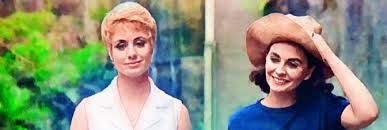
Mary is envious of those she thinks have fulfilling lives, but the concept is more of a fantasy to her. She reconnects with a school chum named Flo Harrigan (in a rousing turn played by Shirley Jones) who even though Flo denigrates her own life experiences as nothing more than tawdry, Mary sees Flo as having accomplished more with her life than Mary has to this point. Flo is comfortable in her own skin, Mary is not. Mary’s friends in Denver are all caged Middle-class trophy wives, who have all the status and social advantages, but they don’t feel alive.
In one sequence, one of Mary’s friends shows off her new breast implants to her other friends, who mostly approve, anything to keep her Man or Men in general interested. Male characters in this film are more the side note; they are predictable, they are self-assured and act as if they have all the answers. Mary’s dalliances with other Men are mental; her Gay hair dresser, her unassuming overweight Bartender at the local saloon, they are her buddies who understand her inner struggle. When Mary is faced with another Wedding Anniversary party, she bails and runs away to Nassau in the Caribbean, if only for a few days, to rediscover herself and what she wants out of life. She flirts but is still to bashful to be aggressively promiscuous, she wants to walk the Beach at night and revisit her past in thought and try to understand what the fuck happened to her life and her dreams.
I found the modesty in this film refreshing, even though the people on the periphery of Mary’s life are sleeping around, this isn’t Dyan Cannon in “Such Good Friends” or Jill Clayburgh in “An Unmarried Woman” chasing revenge fucks as if they were Men, this is a Woman searching to redefine herself in terms of something or someone she would admire. She hates her existence but doesn’t necessarily hate her husband, but may not really love him either. Everyone around her is attempting to embody being the perfect Middle-to-Upper-class go-getter that they assume they are supposed to be, but the dreamer in Mary can’t take it anymore. She is tired of being Fred’s caddy.
So maybe this plot and story doesn’t sound that thrilling, it is exponentially more fascinating than it may sound. What could be the plot of an episode of “Love, American Style” is actually full of social commentary and cynical analysis. Cameras zoom in on characters, mostly Female, making blunt and freshly candid remarks about themselves and the world in 1969. Toss in Brooks’ visual style and symbolic moments and this film has a lush romantic edge to it, you fell Mary’s emotions, she is the most beautiful, and the most conflicted character on screen.
Part of what makes this movie hum for me was the well written and well acted supports, the parts are key to selling the persona of this film. These supports, for the most part, were played by big names in Entertainment, at the time. By the time I was watching television in the mid 1970’s at the tender age of Elementary School, most of these names had graduated to Television commercials or they were props on game shows. Nannette Fabray is the Wilson’s asexual housekeeper who wears many hats; she’s everyone’s confidant, she downs pills with Mary in part so that Mary doesn’t drink. Fabray is that stereotyped Irish-American housekeeper with a heart of Gold who knows all the family secrets and is as sensitive and loving with Mary and her daughter as she is stout and buddy-buddy with Fred. The housekeeper is instinctually androgynous, she’s here to keep the peace. Fabray is herself but more modern, her asexual glibness is there, but she also speaks in adult terms here regarding drugs, sex, depression, etc. She’s like a PG-13 version of Alice, the housekeeper from the Brady Bunch.
Dick Shawn and Tina Louise play Fred and Mary’s striking-looking, but totally jaded married friends, an effective performance by both. Louise (Ginger from “Gilligan’s Island”) actually displays depth as a trapped housewife of Shawn, who makes sweeping and pretentious declarative statements about society from Screenwriter Brooks’ pen that carry weight, Shawn is not a clown here, he is a sad troubadour, pretending to be the life of the party. Louise is a warning for Mary, except Louise has a husband in Shawn who is horny and flirtatious with every Woman except his own Wife.
Lloyd Bridges as a philandering businessman and Shirley Jones as his Mistress have a spectacular scene together in a Nassau hotel room where Jones discloses to him that her Mother passed along wisdom to her during alcoholic tirades that without an education, her character Flo would end up a loudmouth Housewife or a trashy whore. Jones disrobes in front of Bridges as she tells the story, everything visible to us from her chest up, short of showing her nipples. Bridges then disrobes as well and tells her in this vulnerable moment how gorgeous he thinks she is as he embraces her. The scene is real, it’s touching, it’s sexy, the kind of genuine intimacy that is missing from movies now, especially ones involving hetero intimacy. Teresa Wright as Mary’s Mother is solid and reassuring, she and Simmons as Mother and daughter have dynamite chemistry together.
Aside from all of the positive attributes of the film mentioned to this point, the film’s indelible image is that of Simmons as Mary, an internalized performance, one that she received well-deserved Oscar and Golden Globe nominations for. Small wonder, she is a force in this movie, just an awe-inspiring portrayal. Not to mention, I didn’t realize what a babe she was; she is the most glamorous, the most beautiful and the sexiest Woman on screen here, hell, she’s the sexiest person in this, period. When Simmons is arguing with Fred, or flirtatiously kissing a stranger at her party on the cheek, or letting a Man she has just met at a Resort Casino begin taking off her pantyhose and kissing her legs, she carries a waifish child-like playfulness with her, yet still has the 1,000 yard stare of the all-knowing crone.
Simmons gives a dialed-in representation of a Modern American Housewife ideal being challenged by her own inner child. In one scene, Mary is drunk and wants to watch “Casablanca” for the upteenth time and cry and relive the thrill of temporary romance. Her daughter, a teenager, comes home from teenage partying and does not want to watch that sappy shit with her drunk-ass Mother. Mary wants to relive that joy that only cinematic fairytales can deliver for her. Simmons conveys Mary’s struggles and her pursuits with such conviction, there’s never a moment where she takes a break from the character. Simmons and Joanne Woodward I feel are similar in that respect, they maintain the intensity of their onscreen characters throughout the duration of every second they are on screen.

When Simmons and her daughter embrace, it’s a tearjerker, when Fred scolds Mary for spending too much money on a shopping spree, Mary begins to do a mischievous strip-tease to take the merchandise off. Simmons sells it with such sarcasm and innocence simultaneously. She balances her portrayal between a crazy person who thinks they are normal and a normal person who worries she’s crazy. What made “The Happy Ending” for me most compelling was such that it was a deeper late 1960’s/ early 1970’s type film in a TV film’s clothing about unhappy Suburbanites. A movie about a Woman who is too smart and self-aware to be happy being superficial, that it eats at her until she reacts. Watching this felt like an accurate portrayal of the adult world that I never got to see in 1969 because I had just been born when this was all going on, if I had been there, I hope everything looked this pretty and everyone was saying deep shit.
Leave a Reply