It has been said by some that imitation is the sincerest form of flattery. I was recently transported by my mind back in time to the late 1970’s and my sister and I were of Elementary School age, hanging out with Dad. Dad would take us outside to exercise after sundown on the Grounds of the University of Virginia and then when we came home he would pull out Two boxes of his prized “45 records from the 1950’s and early 1960’s. While he spun his prized possessions on the family record player (remember those?), we all danced around the living room, performing nonsensical moves that only children can conceive of to Rock-n-Roll. One time, Dad put on a curious single called “Chantilly Lance” by an artist named “The Big Bopper”. We all gyrated around the living room while the song was playing and then Dad announced to us that the most interesting aspect of this song to him was that the singer was White.
At that moment, I hadn’t really contemplated whether singers sounded White or Black, it wasn’t on my Ten-year old radar. Yet once he said it, it opened a nebulous new world of thought to me. Why would someone want to ‘sound Black’? I thought to myself. It took years, maybe decades for me to understand that the Beatles, The Rolling Stones, Elvis Presley and even Pat Boone, for chrissakes, (and countless others) had made “sounding Black” a career pursuit and arguably, a business model. These childhood thoughts, and a veritable cornucopia of others swirled in my mind Easter weekend when my 27-year old son sat me down to finally watch the Oscar-winning metaphorical Horror movie “Sinners”. I contemplated as I viewed it that a performing artist friend of mine named Demented Wordsmiff once said to me that his intent as an artist was to create art that the public would identify as “edutainment”.
This Ryan Coogler-directed effort has received many well-deserved accolades, as well as much fiery debate as to its artistic merits and meanings. I would contend that this particular film has strong messaging, but that it’s only a Horror movie on the surface, the Horror aspects are almost it’s least interesting facets and of course as you well may know by now, Horror films rarely lose money, they are like the telecommunications branch of the cinema industry. That said, this is a handsome and delicious (no pun intended) looking film. Maybe too perfect-looking, but that is just the old curmudgeon in me complaining about the direction that the film industry has taken in making everything on-screen so perfect-looking that it borders on animation or like old-time sets with human beings involved.
The surface story is not complicated but the nuanced edges and commentary of the film is where the intellectual treasure lays. The movie begins with a set of twins (both played by Michael B. Jordan) who return after years abroad to their hometown area in rural Mississippi. It is the 1920’s or 1930’s we’re led to believe. The twins, we discover through various conversations and dialogue, have fought in World War I, been involved in business ventures and made a name for themselves in the rough and tumble world of Chicago, Illinois. We even get a mention or two of them rubbing elbows symbolically with none other than notorious Chicago mob boss Al Capone. The inference is that they have survived and thrived in the most hardcore setting a Black Man in White dominated America could experience and now they have returned to their hometown and their roots.
I have gotten somewhat ahead of myself, there is a brief explanatory description in the beginning of the film in animated form of how how many World cultures have musicians and artists in their sect that channel energy and spirituality through their music and the accompanying lifestyle and social pageantry. Music is not a subject of frivolity in this film, which I feel is an important distinction, while many films about America’s past portray music and musicians as almost a social garnish, “Sinners” gives America’s musical history, specifically that of African-Americans, the respect and prestige it deserves. In this regard, I equate “Sinners” as a film with ties to older movies about the roots of African- American music, pointedly the Blues and less a traditional brick and mortar Horror film. Movies like Gordon Parks’ 1976 film “Leadbelly” (reviewed in this blog previously), the underrated 1977 Scott Joplin biopic TV movie with Billy Dee Williams, Walter HIll’s homage to Blues music from 1985 titled “Crossroads” and a 1958 bio-pic on music pioneer WC Handy, “The St Louis Blues” starring Nat “King” Cole come to mind.
Before I begin a more thorough exposition on the various strengths of “Sinners” and why I believe this picture in finality is an important American film, I wanted to air some grievances concerning what annoyed me about the film. Whilst I respect and admire Director Coogler’s risk-taking style, he attempts quite a bit of messaging in one film and most of his cinematic punches land, but some didn’t for me. This is a handsome-looking film, yet the overuse, in my opinion, of CGI and AI I found annoying and excessive. I realize that the penultimate effect can be equated with the use of sound stages in days of yore (think the look of films such as Hollywood musicals like “The Wizard of Oz”, “An American in Paris” or “Cabin in the Sky”) that the effects that Walt Disney, Alexander Korda, Vincent Minelli, Busby Berkeley, etc created with sound stage visuals is now done by CGI and AI, just a modernizing of an almost century-old cinematic technique. Yet the end result numbs me as a viewer at times, too much special effects and I begin to think I’m watching digital animation and it causes me to lose interest, it’s geometrically exact and not realistic looking. There are scenes where the protagonists are driving past Mississippi cotton fields and I would have preferred real fields to a visual that appears to be digitally manufactured, although making this setting appear somewhat like Disney’s controversial “Song of the South” may have been intentional, I felt this film was that well thought out and nuanced that such easter eggs may be present.
Coogler takes abstract risks with his narrative that are hit and miss, but I commend him for his rapid fire attempts. A surreal sequence where African-American musical artists from different eras are shown performing as sort of symbolic spirits I actually found thought-provoking and different, but the scene has all the intellectual impact of a Michelob commercial; it’s too slick and robotic looking for my taste to have the desired impact, the passion of the performers is lost in the symbolism, it’s a history lesson with little human connection. It might as well have been a spot in one of those “Night at the Museum” movies, the technical aspects not withstanding, the use of the imaging came across as cold and collegial, like we the viewers are watching an Omnimax presentation on the legacy of American music.
Secondly, for a movie about music, the film takes a surreal approach as if there is an iPod playing at the pivotal/event party where the main action of the film takes place. The film’s protagonists, at least the main Two characters, are twins played by Oscar-winning (for this film and deservedly so) Michael B. Jordan. The Two characters transform an old wooden warehouse/barn into a juke joint with the intentions of making money and hosting community social events, in this particular instance, it’s a Saturday night. While they do coerce a couple of show stopping musicians to perform, one a savvy young Guitar player with a great voice named Sammie (played by Miles Eaton, potentially a character based on legendary Bluesman Robert Johnson and an allegorical symbol for Blues performers such as Hudie Ledbetter that survived Southern American living in the first half of the Twentieth Century and spread Blues music throughout the world in their old age), the Second is a Wiley old alcoholic piano player and Harpman played by the under appreciated career actor Delroy Lindo (also Oscar-nominated and righteously so for this), there’s always music going on throughout the fictitious events on screen but there’s no Bass, no Drums, the atmosphere reminds me of a modern wedding gig at an events venue in 2026, where the performers are using tracks to back them up, rather than an organic live music event in 1930’s Mississippi. Maybe a trivial point, but it irritated me as the film went on, especially when performers such as the sultry Jayme Lawson gets up to perform and there’s no band behind her, but there’s music behind her as if she is a contestant on a popular modern TV contest show such as “The Voice” or “American Idol”.
This angle of the film gives us the pretense of music as a magical art form without showing us what makes it magical, in my estimation. The final touch of the movie that I found forgettable was the lack of depth given to Female characters, with one notable exception. There are several well fleshed-out Male roles in the film, the Women characters seem like they are just there, with the one aforementioned character, a local Woman who carries on African traditions of magic and witchcraft, played marvelously by Wunmi Musaku. One of the twins portrayed by Jordan is drawn to her spiritually, emotionally and physically, the other twin is involved with a slippery and untrustworthy White Woman, played by Hallie Steinfield. With the exception of the African Female Witch character, the Women in this movie seem simply there, which isn’t necessarily exclusive for film, but for a movie where Women seem so importantly ingrained in the machinations of the plot, the lack of depth and detail in their characters was noticeable.
All of those gripes said, this is still an important film and a well-crafted one about an American past and pretext that does not receive enough notice, the metaphorical discourse and parables on display here worked for me in totality. The movie for the most part occurs over the course of one day and one night, early on we see a Vampire named Remmick being pursued by Native American Shamen/ Bounty Hunters . The Bounty Hunters pursue the Vampire to a home resided in by gun toting Ku Klux Klan members. The pact that ensues between Klan members and vampires seems fitting, if Two sub-groups were ever destined to ally, it would be these. For this film, where the spirituality of African-American musical culture is celebrated, the White characters are a hybrid of societal carpetbaggers and forked-tongued hucksters, they don’t possess the creativity, ingenuity or temerity to create a scene of social and artistic gatherings themselves, but they are certainly wiling to deceive, ruin and leech off of someone else’s good time and call it their own. This is where the film, besides the camaraderie and energy between the African-American musicians and venue creators, really begins to click.

This isn’t a Horror action movie where following the mythos of cinematic Vampire tropes and rules are that essential or important. It is, however, a movie in part about the deceptive and disingenuous practices in the United States by members of the predominately White entertainment industry, preying on African-American performers, specifically musicians, since the 19th century. While the circumstances in this movie could serve as an analogy of the perils that faced Black-owned businesses in America a hundred years ago, I found some of the film’s messaging directed specifically at the creation of American music by African-Americans and how it was (and at times, still is) lifted, stolen and monetized by other cultural groups without proper acknowledgement and/or compensation a subject that was long overdue to be taken to task.
In “Sinners”, the ambitious twins played by Jordan are gathering people and supplies in one day to host and hopefully profit from, a night time event, complete with great music, drinks and Southern ambiance. The inference here is that this is a happening created by Black people, meant to be enjoyed (but not exclusively) for Black people unapologetically. The twins have bought the building from a shady White man that they have threatened to kill if they see him appear again at this location with more White men in tow. We discover the shady White man is also a member of the KKK. In this regard, the film sets up a separate and tense dynamic between Whites and Blacks, that our main protagonists here need to be armed and unrepentantly vigilant when dealing with Southern White folks. No quarter asked, none given. This is an important distinction that runs throughout Coogler’s film. In the past, many American Hollywood films have accentuated White aggression and perceived social dominance; here, there is the existence of racism, but Black characters give as good as they get, there is no caste system here.
One place where the AI and effects do work here is the use of long-range energy created by the Vampires when they set up camp in the distance from the twins’ sponsored shindig. It’s creepy, it’s cathartic, it brings to mind the kind of visuals that music companies of over a hundred years ago used to sell their minstrel songs. The images of fire and the boisterous energy of colored people in the dark of nighttime as if they were engaged in something forbidden, yet it’s actually the projection of the White folks doing the portraying. Alluding to something potentially primitive and savage. Cooler has created a smart and deep film, it’s as shiny and precise a technical movie as it is full of socially relevant messaging and commentary. The Horror is incidental, in it’s form it reminded me slightly of Director Robert Rodriguez’s madcap and inferior “From Dusk til Dawn” from 1996. That film is exclusively a Horror action movie and nothing else. There is much more to “Sinners”. This is less of a classic Vampire movie and more of a supernatural metaphor about stolen intellectual property.
The script, by Director Coogler, is witty at times, mystical at other points, the rhythm and tone of the dialogue sounding 21st century modern at times was fine with me, at other junctures it came off somewhat as cliched speech from other films about times from a hundred years ago, no harm done, though. I had no qualms with the mystique of reverence for the past mixed with contemporary dialogue. The clothes looked like everyone was modeling for a Vanity Fair photo shoot after the movie, but it wasn’t that much of a distraction. The film, through it’s music, attempts to contemporize the sound of the Blues, most likely for marketing purposes, my Seventeen year old daughter upon watching this movie has likened to bumping one of the main tracks in my car when she can commandeer the radio. This brings me to the points about “Sinners” that made it work for me in finality.
Starting with actress Musaku who deals in magic and holistic remedies, the character was perhaps the most original and unique persona in the film. She brought an authentic and sagacious energy to her role. One of the twins played by Jordan named “Smoke”, seeks her wisdom, her knowledge and her physical sexuality. She is one of those actresses that the longer the camera stays on her, the more attractive she gets. Her character has depth, we anticipate every one of her lines as if they carry insight, relevance and authority. She brings a fresh voice to the Horror movie ensemble construct, neither a scream queen nor a fool, she is a worthy team player and her actions and words are tinged with a sense of community from African cultures’ traditions.
Miles Caton is , according to trade magazine background on the film, an unknown who was cast for his musical prodigy as much as anything else. Discovered during a talent search for the film, his presence as an actor is sufficient and sturdy, his musical talent abilities are top-notch and add both a reverence and contemporary marketability. One thing that I felt this film did get right was having its Blues music sound both traditional and pliable to modern listeners’ desire for a certain dramatic pop-music sound and dynamic they require. This character is actually quite vital to the film’s messaging and is meshed into the storyline from beginning to end.
The first time I saw Delroy Lindo in a movie, it was as a shady criminal in Director Spike Lee’s unheralded film, “Clockers”, a movie that doesn’t receive the love it should. Lindo is fantastic and absorbing in everything I’ve ever seen him in and as the boozing musician Delta Slim here, he delivers an engaging and Oscar-worthy performance. Lindo has the veneer and speaking tone and rhythm of a local scuffling musician, he captivates the viewer whenever he is on screen. While I would never denigrate an actor of the quality of Sean Penn (Who beat out Lindo for the Best Supporting Actor Oscar for the 2026 Oscars), it would have been satisfying to see Lindo take the trophy home, his world-weary mannerisms and feckless enthusiasm is a a contributing factor as to why “Sinners” works overall and a less dialed-in performance from a less superior actor in this role would have damaged the film’s cohesion.
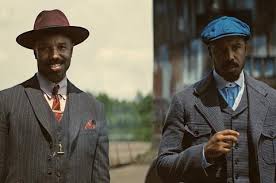
Did I forget someone? Haha, just kidding, I don’t know all the movies Michael B Jordan has been in, but I do remember him being my favorite character and performer from 2017’s “Black Panther” as Killdozer. Here, Jordan as the twins named “Smoke” and “Stack” gives a physical performance, yet in some ways, his ruggedness and savvy reminded me of gangster action movie characters of the 1930’s like Cagney, Bogart, Robinson, Widmark, etc. There is a toughness to his performance, but also a relentless calculating energy. His twin roles represent two sides of a familiar coin, one twin is strategic, makes tradition and values-based choices. His thinking his guided by what he has learned as an African-American in a duplicitous world that more often than not, does not have his best interest in mind.
The other twin is more of a risk taker and does less analysis. Coincidentally, he has a soft spot romantically for a Half-White Woman who eventually brings trouble. The characters here reminded me of Black character-driven films from the 1990’s that also represented the time in America of the early part of the Twentieth century, such as 1995’s “A Rage in Harlem” and 1997’s “Hoodlum”. So many Hollywood films of the past (about the past) have represented Black characters as subservient, to preserve some sort of caste-system driven narrative, this movie is having none of that. The film also, through it’s title as a suggestion, puts forth the notion that people, most notably people of color in a world rife with White influence, put their souls in peril by engaging in a world of night-time music, booze and noncommittal fornication, that this lifestyle opens up one’s being to corruption and self-destruction.
In retrospect, my final kudos goes to the creator of “Sinners”, Director Ryan Coogler. Is this a great Horror movie? No, the Horror premise is a Trojan Horse to get more butts in seats, but this film is sort of a blood-splattered Musical that has salient points concerning the coopting and thievery of African-American creativity. In one important scene, the original evening of Blues music has been shut down and interrupted by the White Vampires, who are now performing their own music outside and doing it with the help of coerced Black folks, a few yards away in the moonlight. While the music by the White Vampires isn’t bad, you get a sense that Coogler has his White Vampire/KKK people competing with the Juke joint’s creativity, prestige and product. This is the film’s biggest point and one I had not seen often made on cinema screens but had heard in late night conversations with musicians in smoky rooms, passing blunts and brews.

That throughout history, some unsavory and unethical types have wanted to wait and see in which direction the creativity of Minority communities would go, so that opportunists can co-op, imitate, capitalize and monetize on it for themselves. Here, Coogler makes an excellent and long-needed point to broadcast to the world through the media of film. “Sinners” is impactful, an original film, one that needs to be seen and discussed, for far too long in America, the points this film is making have been glossed over by the Hollywood powers that be, that the theft of intellectual property is a trivial assertion in the minds of some. I would argue that these issues are far from trivial to the artists and musicians, especially those in Black America, that have been wary of these types of goings on in America, literally now, for centuries.
Leave a Reply